Internet, I am a queer researcher of queer health and I have something to say.
A few weeks back, a study went viral about the relationship between marriage equality policy and queer teen suicide rates, and a lot of people reacted thusly: “queer mental health is better when we’re not discriminated against! BREAKING: SKY IS BLUE, WATER IS WET”
This happens a lot. People see research about a thing ~Everyone Already Knows~ and they mock it. Now I want to make two things really clear:
1. Everyone does not already know.
2. This shit can lose these projects their funding.
Did you know that media coverage is a crucial factor in funding allocation? When we submit our application for grant renewal, we have to provide a list of news articles about our research so they can decide whether the public cares enough about us to let us keep doing our work. And most research doesn’t get all that much coverage, so individual reactions can really matter. If the primary reaction to our publications is eyerolling, we legitimately might not be able to continue.
I’ve seen some frustration from people who believe this research funding would be better put to use “actually helping” the affected populations instead of–I don’t know, pinning them under microscopes or whatever it is they think we do. But funding for policy initiatives is driven by research. I know you wish politicians would listen to individual voices telling them where the problems are, but that’s honestly not a smart way to direct limited resources. We need solid evidence. And a lot of the areas that need the most attention aren’t obvious–who knew bisexual people are at a much higher risk for physical and mental health disparities than gay and lesbian people? Who would have guessed that transgender folks are more likely than any other group (including straight people) to be military veterans, but overwhelmingly don’t claim their benefits? I’m sure some people noticed these patterns, but they definitely weren’t common knowledge within the queer communities I’ve grown up around, and those findings are leading to direct action as we speak.
I get that it can be frustrating to feel like your identity is being reduced to facts and figures for the benefit of red tape. But trust me, the researchers aren’t your enemy here. Most of us are queer too. All of us are just as frustrated by this crap as you are. We are doing our best, and I swear to you this work really is making a difference. Please don’t sabotage it.
I’m reblogging this because it only has 9 notes, and it should really, REALLY have a lot more.
Also, given the current US administration’s plan to stop collecting data on LGBTQ identities as part of the census, we are in need of accurate, useful data now more than ever.
Plus the ability to cite peer-reviewed evidence of these sorts of things and quantify the extent of “obvious” effects can be pretty important to researchers who are working in adjacent fields that don’t produce the sorts of headline soundbites that get mocked on social media.
And often headlines and summaries are misleading and reductive- a study about wage gaps across a variety of demographics might get headlined “Women Still Make Less Than Men, New Study Shows” when the bulk of the paper is about the intersection of race and gender identity, and I’ve seen people on Tumblr mocking a study about the flavor compounds in food across the Indian subcontinent, conducted by Indian scientists at an Indian university, as “LOL white people don’t know how to cook.”
And to add to this– it’s also important to be able to point to something and say, no, the problem is not that these people aren’t straight. Being able to point to actual science that says, “no, it’s not us, it’s you and how you treat us”– well, that’s a a good thing.
There are a lot of people out there who genuinely believe that being any
flavour of queer is intrinsically harmful to you. That unhappiness is a
natural result of being gay, that to be trans is to be mentally ill,
that bisexuals are confused and troubled. There are people who believe that you cannot be happy or well if you’re queer, and not all of those people are bad people. Some of them have what they perceive to be your best interests at heart, and they want you to be happy, to be well, to be physically, emotionally and mentally safe. And they still act in a way that causes harm, that damages lives, isolates kids and tells them that pain is what they should expect for being who they are.It’s important to be able to say, “these policies kill kids”, to say, “no, this wouldn’t have happened anyway”, to say, “yes, it does matter what you do.”
It’s also important for court cases. Challenges to, say, laws forbidding people in same-sex relationships from adopting need and use studies finding that children for those households fare no worse than any other. The court won’t be persuaded by anecdotes. The state supreme court of Maryland accepted having civil unions instead of marriages for same-sex couples on the condition that that studies documented whether the same rights under a different name produced equal outcomes. When it was found that they did not, the court ordered the state to allow marriage equality.
Tag: research
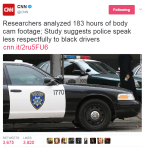
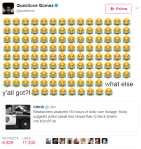
no shit sherlock
Ok, so people are making fun of this because yes, “What else is new? That’s what we’ve been saying. Tell me something I don’t know!” and I get it. It is like when they did a study on the fact that women gain weight after pregnancy. In other news water is wet and fire is hot. But if they document it in a conscious, systematic way maybe they can fix it. We did research that teachers, even female teachers tend to call on boys more and give them more attention, so then we were educated on ways in which to fix that bias in our classrooms. If we can see objectively that they do it, therefore removing any of the baggage of the harmful stereotypes and racist preconceived notions that the people who need to hear this most may carry. When someone shares their story (like girls feeling overlooked in the classroom, or black drivers being pulled over for driving while black and generally being harassed) people can think ‘oh they are just making a fuss’ or ‘it couldn’t have been that bad’ or ‘ they must have done something wrong to deserve how they were treated’. To study it in this way, and hopefully others, gives people the tools they need to stop dismissing it and start fixing it. I know it shouldn’t be necessary, but hopefully it can do some good.
 Beltainefaerie's Flights of Fancy