so we have a conversational safeword in my group of friends and it’s great, idk why more people don’t do this. whenever someone wants a subject to be dropped immediately no questions asked we just say “spleen” and we stop immediately and it’s a really good way to avoid crossing the line between teasing friends and genuinely upsetting them by accident, or stopping debates from turning into actual arguments
Wait but no this is actually a brilliant idea.
When I was a little baby high school student, I used to do the Living Chessboard at our local Renaissance Faire. We always used “forsooth” to indicate if someone was actually injured and needed to quickly end a choreographed fight. It was also very useful when doing little street improvisations because if someone tried to stop you, you could say “forsooth good sir, I must leave.” and they knew you couldn’t do a scene right then. We all used it in real life too, to say “no really” and it was amazing because there was a word used in a casual setting that meant “I’m not playing, I need you do listen to me.” So if someone tried to pick me up or tickle me, I could say “forsooth stop.” And I was instantly obeyed. I had “forsooth” long before I learned what a safeword was, and having a non-sexual safeword for everyday use amongst a circle of friends was the best thing ever. It made me feel very safe and listened to, even as a tiny 14 year old. Because let’s be honest, 14 year old me was teeny tiny and adorable and it’s easy to coo at kids when they say “no don’t pick me up!” but to have a word that every single person respected to mean “whatever I say after this MUST be listened to” was amazing. It gave me a definitive voice when it would have been easy to dismiss me.
So basically having platonic safewords is awesome and I’m all for it.
I’m sorry but this question has kept me up at night: what exactly is Mrs. Hudson’s position/status relative to Holmes and Watson?? Them paying her rent would imply that she owns the place and is therefore above them/an authority figure and yet she makes their meals, cleans their flat, and runs errands for them? And she calls them “sir” but they don’t call her “ma’am” or “madam”? Is she their servant or their landlady or what is the deal there I’m so confused.
Tagging people who seem like they have expertise in the matter, appreciate any info you can give me! @bakerstreetcrow @inevitably-johnlocked@plaidadder@i-love-the-bee-keeper Thanks 🤓 And if anyone knows of experts I missed please feel free to tag them too!
@etaleah Mrs Hudson clearly owns 221B herself, or she would not be able to let rooms in it. She is one of a relatively well-off group of independent female business-women in London owning a capital asset – the house – but needing income – Holmes and Watson’s rent – which for the suite of rooms they had could have cost anything from 4 to 15 guineas a week, but was likely to be at the lower end of that scale, since Baker Street was not the most fashionable area. For that, they get the rooms, and food: washing, coals and candles would be extra.
How does she come to have the house?
Mrs Hudson may not be married, for starters. Older, respectable women were often called ‘Mrs’ as a courtesy title. She could have inherited the house from a father, or a husband, in which case, as a widow, or an unmarried daughter, her only opportunity to make an income would have been to let rooms, and provide housekeeping, with the help of a servant or two, for her lodgers. In this case, she would have descended the social scale: she would be a lady, who had had to go into commercial business to support herself, as she has no male protector.
It’s unlikely, but she could have bought the house, and gone into business herself: she could, for example have been gifted the money to buy it in someone’s will, perhaps the mistress of a household whose trusted family servant she had been for many years. Perhaps she was a cook: most cooks were referred to as ‘Mrs’, whatever their marital status. In this case, she would have ascended the social scale: having been in service, and therefore working class, she would have been shrewd enough to work her way up to being a property owner in her own right, and therefore middle class.
A third possibility is that she was given the house as a payoff, or parting present from a lover. There is no guarantee Mrs Hudson is respectable: if anything, her tolerance of Holmes and Watson’s Bohemian habits rather argues she’s not: she’s not fussy and horrified enough about their tobacco smoking, crime fighting and harbouring of unsavoury urchins to be a born lady come down in the world, nor as concerned about propriety as she would be if she had clawed her way up to the middle classes, and didn’t want anything dragging her down. For me, her large tolerance argues a Bohemian background herself. So if she is a former prostitute, Madame of a brothel, or rich man’s ex-mistress, turning the profits of ‘immorality’ into a solid business, then she has transcended the social scale.
So why does she call Holmes and Watson ‘Sir’?
Because that would have been the usual form of respectful address from a middle class woman (and whoever she was, she’s middle class now) to Holmes, who despite his Bohemianism is unquestionably a ‘gentleman’ and Watson, who is both an ex-army officer and a doctor. She owns the house, but they outrank her socially. She is in business: trade. Holmes is a ‘consulting detective’, perilously close to being in trade, but only because he’s stepped out of line. (Mycroft is what he should have been!). Watson is an officer, and therefore a gentleman, and a professional.
Also, they effectively provide her livelihood. She owns the asset, but they keep her in it. So they are in an employer/employee relationship, where they enable her to keep the property she owns, in exchange for her providing the property and service for them. They have the advantage technically, since they could move (although they wouldn’t, as it’s comfortable and they have a more than plain, cool business relationship) in which case, if she didn’t find a replacement she might have to sell the house.
I hope that helps!
This is beautiful, and I have nothing to add except that in “Red Circle” we discover that there appears to be some sort of landlady solidarity, and that weird behavior is up to a point sort of the norm for lodgers.
ATTENTION: We are no longer drinking Respect Transgender Juice; we are bathing in it.
this is for Lush America, which is A+.
here in Australia we have the Love Wins soap, https://au.lush.com/products/new-products/love-wins which goes straight to LGBT+ grassroots charities! we haven’t got the bath melts this year yet (they’re seasonal here because they would Die in summer) so it’d be cool to get that here too ❤
Queer Looks is a celebration a selection of iconic aesthetics and symbols used by queer folks in the west from the last 150 years. We have printers lined up and rearing to go, so all we have to do now is raise the money to pay our artists, manufacture the two hard enamel pins, and print the gorgeous 12-piece illustration zine!
Queer people have been sending messages to each other through clothes and accessories for ages, and we’ve always had ways to find each other in a crowd. In the Queer Looks zine, you’ll find the carnation codes of the 1890s, the queer blues divas of the 1920s and 30s, and even the denim and pins of the present day. All these–and more!–are gorgeously illustrated by our crew of Dates veterans:
Check out the Kickstarter page to find out more information…and to pledge! Even if you aren’t able to back the campaign, a reblog or share can make a huge difference.
Let’s make a zine!
Guess what? We HIT GOAL LAST NIGHT (then raised a couple hundred dollars more)! On to the stretch goals–just over $300 to go before we unlock that third pin!
Hey ho, I’m in this and it’s already funded?? Wow!!
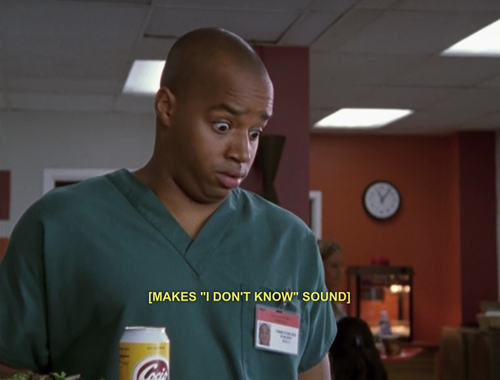
You know what I think is really cool about language (English in this case)? It’s the way you can express “I don’t know” without opening your mouth. All you have to do is hum a low note, a high note, then another lower note. The same goes for yes and no. Does anyone know what this is called?
These are called vocables, a form of non-lexical utterance – that is, wordlike sounds that aren’t strictly words, have flexible meaning depending on context, and reflect the speakers emotional reaction to the context rather than stating something specific. They also include uh-oh! (that’s not good!), uh-huh and mm-hmm (yes), uhn-uhn (no), huh? (what?), huh… (oh, I see…), hmmn… (I wonder… / maybe…), awww! (that’s cute!), aww… (darn it…), um? (excuse me; that doesn’t seem right?), ugh and guh (expressions of alarm, disgust, or sympathy toward somebody else’s displeasure or distress), etc.
Every natural human language has at least a few vocables in it, and filler words like “um” and “erm” are also part of this overall class of utterances. Technically “vocable” itself refers to a wider category of utterances, but these types of sounds are the ones most frequently being referred to, when the word is used.
Reblog if u just hummed all of these out loud as you read them





 Beltainefaerie's Flights of Fancy