Because, like. On the one hand it’s just fun and funny and silly in the way we want Spidey to be- him being young and naive enough to take a command (like “You’re an adult in the Jewish community now” farther than it’s maybe intended.
But on the other hand, this is exactly what’s intended. Superheroes- at least, the best ones- are basically the living embodiment of “If not me, then who?” They’re trying to make the world a better place than it was. And that is the responsibility of any Jewish adult. Peter getting bit by a radioactive spider and saying “Well, shit, looks like my only option is tikkun olam” is SUCH A FUCKING RIDICULOUSLY JEWISH CHOICE.
Like- if Peter was already comfortably Spidey in Civil War, in the MCU he had to be pretty close to his Bar Mitzvah when he became Spider-man. Which means that it happened right in that time where you’re taking the idea of what b’nai mitzvot means super seriously. You’re suddenly expected to view the world as something you can fix. You’re considering what it means that you’re suddenly an adult, and that you have these new responsibilities, and how can you live up to them.
In that context, with great power comes great responsibility isn’t just about being a superhero, it’s also about being called to the bimah, and permission to read the Torah, and the ability to join a minyan. In that context, developing fucking spider powers must feel like a sign of how being a Jewish adult encompasses so much more than you could ever imagine, both in terms of pivilege and in terms of obligations.
Maybe “Spider-boy” could walk past someone who needs help, but “Spider-man” could not. In choosing that name, Peter is unequivocally embracing the power and burden of Jewish adulthood.
NO BUT GUYS.
Consider:
Peter’s congregation does not, officially, know that he’s Spider-man. It is definitely his secret identity and that has not been breached, he is VERY SECRETIVE, etc.
Except.
Except that they’re a community and they all know about the tragedy that took his parents, and then to lose his Uncle Ben (z’’l) on top of that.
When he started acting odd, they all thought it was grief, made it a point to keep an eye on him.
When he started asking questions about the morality of certain things- they took notice.
The way he disappeared some afternoons, even if there was a youth group meeting (and he used to be pretty good about attending those when he didn’t have clubs after school), and those always happened to be the same day Spidey footage showed up on YouTube.
The way he’s always offering to run errands and just happens to be able to do things faster than anyone else can.
The way Spider-man doesn’t seem to work on Shabbas unless there is something that really cannot be solved without him.
They see the Bugle articles about him and, as a community, reject them. The rabbi says it in his sermon: Spider-man is not a menace, he is a mensch.
In the pews, Peter Parker’s sigh of relief is loud, and everyone pretends not to hear it.
Peter asking his religious school teacher REALLY BIZARRELY POINTED QUESTIONS. Peter bringing up weird fringe Jewish theories he found on Reddit and YouTube and being like “Is this true though? IF I GOT BITTEN BY A SNAKE-” “Peter, did you get bitten by a snake? Forget religious concerns, do we need to take you to the hospital?” “DO NOT TAKE ME TO THE HOSPITAL”
Man, but this is actually a really interesting question! Because health and well-being takes priority over basically everything else in Jewish tradition, how does developing superpowers factor into that? Are they enhancing health and well-being, or compromising it? If it’s the former, would doing things to support superpowers be considered not just good because helping people is a mitzvah but also because it is using his body the way it was intended? By biting Peter, did the radioactive spider inadvertently perform a great service in more ways than one?
“Do aliens count as life? Would killing them bring repercussions upon me? Hypothetically speaking.”
“Am I a bad Jew if I teamed up with a non-Jew, like a…a spider or a gentile god or a sentient raccoon or something in order to fight said aliens? Hypothetically speaking.”
“Could non-kosher animals that perform a good service for a Jew be rewarded? In what ways?”
“Is it Jewish of me to get the urge to crawl into a ceiling corner and wait for flies?”
“What if I could help people, but the way in which I helped them didn’t match up with Judaism? I could follow Jewish teachings, but then I’d be helping less people…”
I think what I love most about this is that so many of these questions have halachic precedent, some even in our world, but ESPECIALLY in the MCU.
Because you know that the second Tony Stark stepped up to that mic in 2008 and said “I am Iron Man,” Jewish scholars started EXPLODING with discussions and hypotheticals about this new world they were suddenly occupying.
Plus, by the time Pete was bitten by the spider, the Chitauri attack already happened, which means rabbis in New York were at the FOREFRONT of figuring out what the shit is going on with their world and how that intersects with Jewish custom.
I’m unclear if SHIELD being infiltrated by Hydra ended up known or if they covered at least some of it up, but if it was public knowledge, that is such a huge additional thing for Jews- that this group historically associated with the Nazis is not just still around, but infiltrating the highest aspects of government. I think that would fundamentally change how Jews approach superheroes and superpowers. In fact, I think that would be a pretty big topic in youth groups and in religious classes, both dealing with kids’ fears and figuring out how to make the ones who AREN’T scared realize how deadly serious the whole situation is. And that, in and of itself, would probably change Peter’s response to becoming Spider-man; the great responsibility of it takes on new resonance in that climate.
… I need to look up that midrash or folktale or whatever it was about King David (before he was king, I’m pretty sure) asking God why He created spiders and scorpions because they seem so useless and harmful, and God doesn’t answer but before the week is out David gets his life saved by a spider and a scorpion in quick succession
because somebody needs to tell Peter that midrash at some point
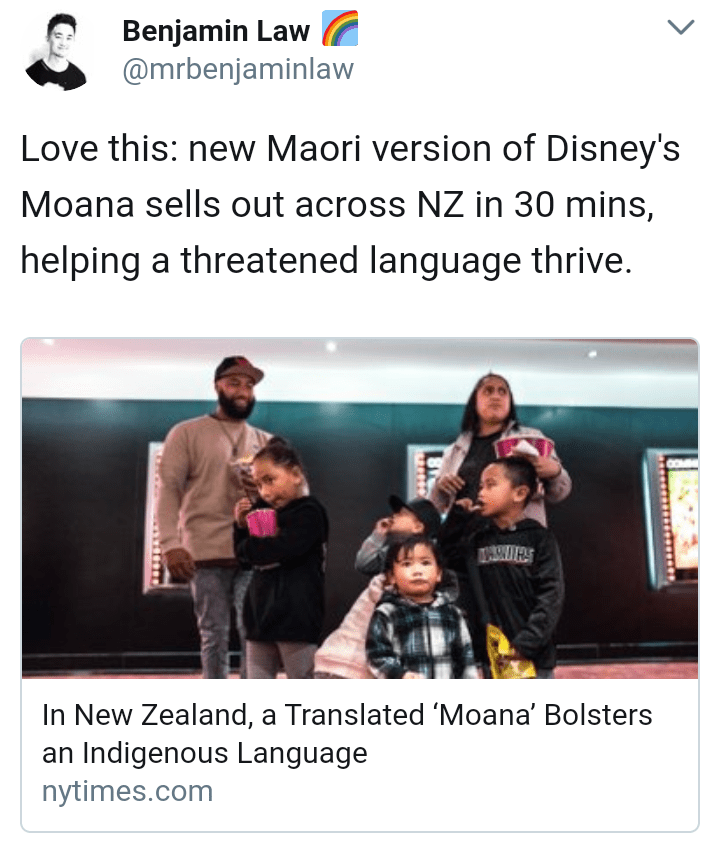
Their Moana is very talented, and their Maui is a local newscaster whose daughters made him audition!
Rachel House still voices Grandma Tala, Temuera Morrison still voices the Chief, and Jemaine Clement still voices Tamatoa.
Rob Ruha and Jemaine Clement translated and rearranged the music so that the songs still worked while sung in a different language, which is super impressive.
this news is from earlier this year, you can now actually listen/watch the te reo version in clips on youtube now. this one is pretty exemplary of the original and new voice actors together! ❤
THINGS I NEED TO FUCKING KNOW: Why every fuckin trans man or nb person I know who binds is like “oh binders are the worst, you can’t breathe in them, I know someone who broke a rib once”,
And meanwhile over in historical costuming, we are fucking eating, sleeping, swordfighting, riding horses, and feeling great like this:
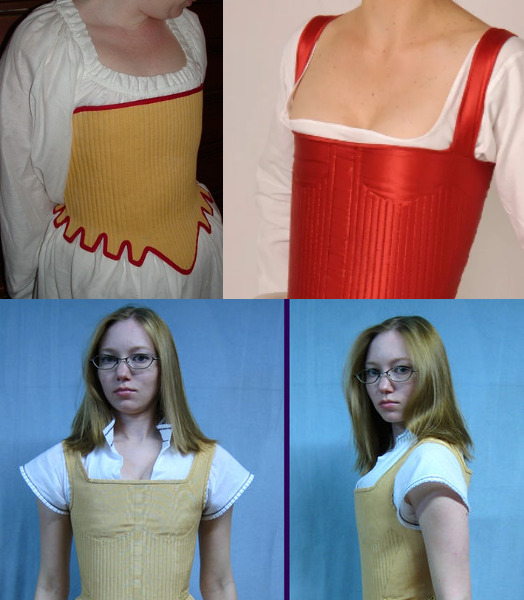
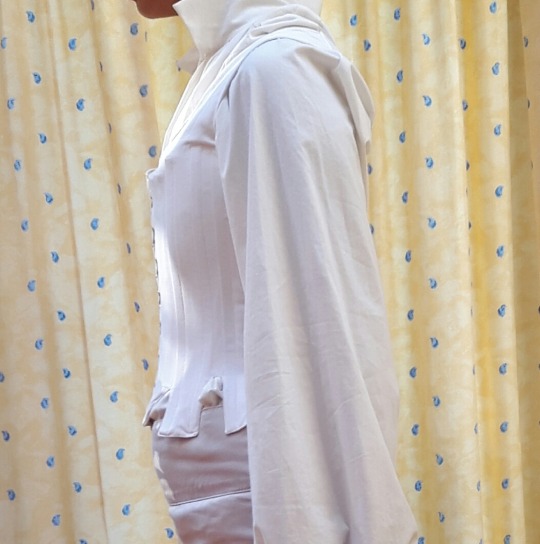
Omigods yes that’s what I used to make my trial binding corset for under a 1830′s gentleman’s costume! I adapted the Elizabethan Pattern Generator Corset to look more like the gentleman’s corset of the time as portrayed in satirical cartoons.
This was only the second pair of stays I made, but it already made me practically flat and was quite comfortable. I didn’t even full bone it and it looked like this:
(don’t judge me for the awful way the boning sticks out at the top, I am by no means a corsetry expert)
People who are actually good at stays will be able to make things like these with no trouble, because if something made from old sheets and recycled boning can do this, imagine what you can do with proper materials.
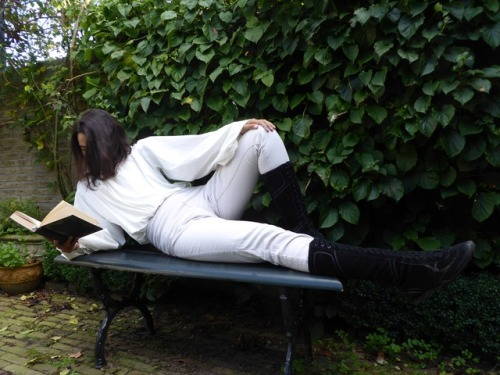
Just for fun, here’s me in my gentleman’s outfit:
It basically eliminates my boobs, but leaves the hips alone because at that time the hourglass silhouette was fashionable for men as well. I’m not exactly flat-chested, so I’d say for a first attempt this one is very succesful.
You are choosing to do that to yourselves. It’s not required of you or something you do in order to fucking live your life as you’d like to otherwise someone might misgender or harass you. Binding because of dysphoria and fucking cosplaying are two totally different things.
Whoa, this isn’t about trying to put transmasc people down compared to costumers. This is about saying, “Modern binders are based on medical compression technology–would it be possible to use other design methods from centuries past to make binding less painful and restrictive for people who bind today because of dysphoria?”
It’s about bringing two groups of people with really DIFFERENT experiences and motives, and saying, “Can we share knowledge and experiences to make trans peoples’ lives BETTER?”
Fair enough. The tone was confusing. I apologize for the hostility.
I also I don’t particularly think boned corsets are the way to go. 1) expenses and 2) the shape isn’t exactly what people are going for, and larger trans men will no be any flatter than traditional binders (it may even make the issues worse)
Yeah, sorry about the tone–I was so outraged by how universally binders seem to be uncomfortable and painful, in compared to my own experiences recreating an era where the conical torso was the ideal.
I’m working on taking the basic principles of rigid vertical support and making it a lot more accessible. After a quick test-run, I found that it is possible to convert a sports bra into a binder, so now I’m experimenting with different ways to do that cheaply and effectively–my test run got some compression, but wasn’t totally flat, so we’ll see if I can improve that, or if this will be a kind of makeshift halfway binder that appeals because it’s inexpensive and can be made at home even if it doesn’t completely provide the desired look.
Right now the biggest chests I’m working with are DD/E cup. You’re right, I’m definitely worried about how it will work for bigger chests. Part of what I’m doing in my work is reaching out to biomedical engineers to ask about how much compression is realistic; it’s the kind of question mammographers ask all the time, since breasts vary a lot in density and squishiness, and to get a proper mammogram, they need to squish the tissue as flat as possible. So hopefully I can get several different fields of knowledge in there.
Some of the bigger trans men I’ve talked to have said they’ve given up hope for any kind of binder that fits them, and others say that even if it’s only halving their chest size (taking an H breast down to a D, which is still an impressively Chris Evansian pigeon chest) having chest wear that isn’t as obviously feminine as a bra would be worth it.
I’m gonna need you to find two hours of your life ASAP and watch the pilot of Pose. I’m totally serious. If I have to arrange a group watch via Discord, I WILL DO THAT. (Do I need to do that? I will. I bought the season on Amazon because we don’t have cable and supporting this is really fucking important to me.)
Why? I mean, Tumblr, y’all have to have been talking about this, because I heard about it through Tumblr, but let’s talk about it again:
The series is expected to include over fifty transgender characters total. FIFTY. f i f t y.
A blunt history lesson wrapped up in two hours of drama. There will be things you knew or knew about or heard about kinda and then you’ll realize how much you can learn, even if Queer History is one of your Special Interests.
One of the main characters is from Allentown. This is only vaguely relevant but it made me go ‘yey’.
Seriously, this media only gets made if people watch it. Vote with your eyeballs. Vote with your eyeballs and let’s bring more of this to TV, to the screens. We need this. I was honestly really nervous that something was gonna blow up or this was going to be somehow terrible and so I was nervously chewing my lower lip until I could actually watch the pilot and it’s not perfect but it’s a pilot and like… it’s … this is our history and our present. We need to make this shit happen.
Seriously, I’m probably going to watch this with @mistresskabooms this summer. Kids These Days need to know some dang history. We can trade off between RWBY and Pose.
Look, I can knit during anything. I have knitted during concerts, I have knitted in the car on cross-country trips, I knit my way through hurricanes and migraines and medical procedures and movies, I don’t have to look at my hands anymore when I knit kippot. There were a couple of points when I realized only after I had stopped knitting to stare at the television, totally entranced, that I had stopped knitting so I could concentrate on the screen. I cannot express enough how much that just does not happen.
I feel very passionately about this show already, now that I’ve stopped holding my breath and have allowed myself to feel things about it, aaaand I’ve only seen the pilot. Is it perfect? No. But it doesn’t need to be.
It’s real and raw and vulnerable and beautiful and triumphant and the MC’s name is Pray Tell which I found out in the first 2m from the subtitles and I love him already and we need to make it happen.
So who wants to do a watch party on this with me? @thebibliosphere, you wanna do something on the Discord? Seriously. Watch Party at the Wizard House, I’ll bring the popcorn.
fx nominally has it on their site but I couldn’t get it to load, even turning off adblockers.
I know, that’s why I’m offering to do a watch party if need be, bc I bought it from Amazon. I figured if I could spend $20 and do a watch party for folx, then we could at least get eyeballs in front of it if ppl don’t have cable, or want to watch it with a group.
A lot of transguys or masculine people aren’t comfortable with wearing a bikini top, so they get stuck wearing shirts in the summertime, or settling for something that doesn’t make them feel confident.
The Rhodes siblings are currently fundraising for the Bareskin Top, which comes in four skin-tone options, on Kickstarter
So I will admit I was feeling funny about going to the Field Museum because of the whole “look at display of objects from colonized groups” thing. Especially because of the Black Panther post with commentary on museums.
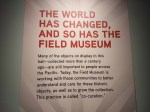
But boy, the Field Museum really does seem to be doing a fair amount towards rectifying past attitudes and actions. I took these two pictures and there were at least two others I wish I had remembered to take pictures of. I was thrilled to see such obvious mentions of this kind of thing instead of a lack of change or pretending it didn’t happen.
@kaijutegu I’ve been meaning to post these for the past few days, every time I see the BP museum post go by again!
This is great, but I would be really curious to see what tribe responses to these efforts have been. I know a lot of tribes struggle with NAGPRA recognition and have to be “validated” through historical records written mostly by white explorers. I would hope the Field Museum would take a more proactive approach. I also hope there’s an effort to return these artifacts to their homes and help those populations with preservation on their own terms, rather than maintaining those items in their own care (unless that permission has been specifically granted).
@upperpaleolithic Idk if you already did, but in case you didn’t, I would click to read the Black Panther post I linked! I know @kaijutegu talks a lot about returning artifacts to the groups they came from & such, and co-curation (which is the maintaining of objects at the museum, but with input from the original group).
I don’t think it’s in the link I included, but I also remember another discussion on that same post where people were talking about how there are still issues with paperwork & bureaucracy & difficulties with recognition or jumping through hoops to sort this kind of thing out. I think it was more about the availability of collections to scholars of color & scholars from the groups that those collections are from, but yeah. Still definitely some difficulties, and I’m sure not all museums have the funds or time or people necessary to be doing as much as they should with de-colonizing and all. But there is some progress and hopefully that will continue to spread and improve.
Loads of good stuff to talk about here! ’s gonna get long, but I hope you take the time to read it if you’re interested in this stuff! Also please let me know if you can’t see the links.
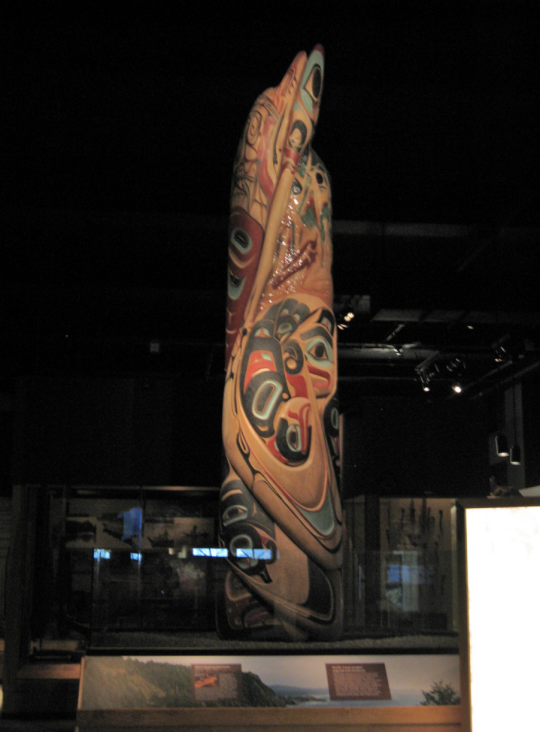
I’ve posted about it before, but the Field has an incredibly good repatriation department that actively does work with indigenous nations to get stuff home. But the goal isn’t “empty the museum,” the goal is “present indigenous history in a way that represents what the native group actually wants.” Case in point: this totem pole.
I told the story of it here, but the gist is there was this really awesome but totally stolen totem pole and the people who made it rather wanted it back, so back it went- but then the museum commissioned a couple of native artisans from that same group to create a new totem pole to take its place. When done well, repatriation’s not just about giving stuff back- it’s about building relationships with the groups. A lot of Native American groups want archaeology and museum exhibitions to happen- they recognize the scientific and social value. But they also generally don’t want to be objectified.
Another really good example of culture of origin reaction to repatriation/co-curation is the Maori response to the Field’s marae, or meeting house. The house was sold in the midst of a family dispute, and another one was constructed at the original site- and when the Field wanted to exhibit the house, their first point of contact was that family. One of the curators had been trying to talk to the descendants for years about the possibility of repatriation, but… ok, so this is another kinda sticky point about repatriation.
Not every object was stolen and/or excavated; some were actually sold- and there can be an enormous deal of shame surrounding past actions, which was the situation with the descent group for this marae. The fact that the museum bought is inconsequential to this shame- the shame here comes from the fact that it had been sold at all. A family elder/chief had sold it, and that was still a major source of family shame- like somebody selling Grandma’s headstone. When the museum tried to reach out to them, for quite some time it was like rubbing salt in this still-present wound. To the Maori, these houses are alive- spirits dwell in them- and they still have incredible spiritual significance to the Maori today, and so what the museum and the Maori ended up doing was… honestly, something really spectacular.
No, really, it’s cool as hell. The original creators’ direct descendants were flown other and stayed in Chicago for a while while they talked with the Field curators about what to do with the marae. It was restored and painted- not the standard methods for archaeological conservation, but that was less important than keeping the house the way the Maori wanted it. Maori groups regularly come in and have events there, and we do what we can to help keep the spirits warm. Sometimes people even sleep in there, because the Maori asked for that. Now, the big repatriation law in the US- NAGPRA (the Native American Graves Protection and Repatriation Act)- doesn’t cover non-Native North American groups, but this is something that the Field finds important for a lot of reasons. It’s not just about ethics- it improves the museum experience for guests as well. It adds context and shows cultural continuity for the creator cultures.
The Field also has co-curation in place pre-NAGPRA; the Pawnee Earth Lodge we have is a modern recreation that was built with the guidance of Pawnee elders back in 1977. It’s been rededicated, and there’s been drum circles and purification rituals held there by representatives of the Pawnee nation to cleanse the space. It would have been ethically tenuous to have a “genuine” earth lodge in the museum, but having one built for us that combines ancestral and modern Pawnee spiritualities and sensibilities is like I mentioned in the other post- it’s a way to show museum guests that Native Americans still exist and that these rich cultures and their traditions aren’t some relic of an ancient past.
But there’s a major design flaw in NAGPRA that makes repatriation extremely difficult sometimes, even when the museum itself wants to give stuff back. This barrier is the five year rule- basically, when NAGPRA was passed in 1990, museums had five years to identify all of the Native American stuff in their collections and list its tribal affiliation. In the bad old days of collecting, a lot of people didn’t bother to take down the names of the folks they took stuff from, and thanks to the way the US laws regarding tribal enrollment work, group affiliation can change, be subsumed into larger groups, or just not be federally recognized. So a lot of material got classified as “culturally unidentified,” and some museums aren’t making efforts to identify it. And legally, they don’t have to, because they were supposed to get that done within that five year period. Five years is a tiny amount of time to get a bulletproof cultural affiliation on artifacts and remains- big natural history museums have millions of objects in their collections sometimes.
Now, I can say with absolute certainty that the Field is not doing that, because I’ve actually worked on some of this material. A few years back, I was working on a project to identify several hundred boxes of that “culturally unidentified” stuff. These boxes were considered lowest priority because they only contained soil samples, rocks, animal bone, some lithic debitage, and ceramic potsherds, but the work still was important. When my chunk of the project was complete, our repatriation department sent notice to several of their native contacts. None of them wanted two hundred boxes of broken pottery back. Case closed- unless later on they decide they do want it, in which case now it’s been identified and so they’ll get it pretty quickly. That’s an example of a best-case scenario. When remains are involved, it gets a lot trickier. Sometimes two or more nations claim the same set of remains, or the museum drags its feet. Harvard’s Peabody Museum runs into this problem a lot- here’s an article from a few years back, if you want some scope on this kind of problem. If the Wampanoag and the Narragansett clam the same remains, and their historical territorial affiliations overlap, and DNA testing isn’t going to give a good outcome (some groups do not want DNA testing, and others are so closely related that haplogroup testing wouldn’t really be helpful at all, plus admixture over the years can make DNA testing even more complex), who’s in the right? Who gets the remains? Sometimes it works out- Kennewick Man, for instance, ended up buried in a location agreed upon by the groups that had claim to him, and most, if not all, of them participated in the interment ceremony. But other times, it doesn’t- and the legal battles wage on, which can get real expensive real quick for the native groups and museums, especially smaller museums that don’t have a big endowment. Fortunately, there are federal grants available to help. But this leads to another massive problem with NAGPRA…
NAGPRA has some serious budget issues.
Do you know who’s in charge of NAGPRA? It’s the National Park Service! You know, the one that our current president is decimating? This means that NAGPRA grants (aka money to be given to people trying to get their stuff back or money given to museums to help ID stuff) have been substantially reduced as well. In fact, they’ve been 100% reduced! That’s right, our wizened yam of a president requested a whopping ZERO DOLLARS for repatriation grants! It does seem like they did get some funding, as they haven’t closed down grant application- but I hope this stands as an illustration of the potential seriouness of this problem. In addition, part of the legal requirement for repatriation is publishing inventory completions and intents to repatriate in the Federal Register, and there’s a massive backlog of those.
Finally, the actual repatriation process does take some time. The NMAI has a really cool guide to safe repatriation online here; you really can’t just hand over the stuff and say “see ya! you’re on your own!” A lot of it’s actually poisonous, thanks to the old-timey pest treatment called “covering it in arsenic until the bugs are dead.”
Written by women, produced by women, and like 90% of the main cast being women.
Female friendships like, omg. Sisters and femal rivals and female colleagues. Women who fart, who pee, who sweat, who get scared, who lie, who have all the Deep Issues (doubting one self worth, wanting more for life, struggling o move up in the world, etc.) men usually have in tv.
No muted cold ugly ass color palette, oh no, here in this show there is COLOR.
18th century fashion!!! Wigs! Men with makeup!!! Gratuitous french!!!
Actual realistic potrayal of the world’s oldest profession. Actual realistic potrayal of how this affected women mentally and physically.
But even thought its a difficult subject they laugh and they party and the joke and find some remote happiness in gritty dirty London. They stick up for each other.
People of color! Interracial relationships!!! Biracial children!!!!!!!
Plantation owners, religious zalots, men judging women for earning a living all potrayed as the antagonistic assholes they are.
I guess this could be argued, but the only ones who look ridiculous or degrading in the sex scenes are men.
The main conflict between two rival brothels is driven by their madams, mature women who don’t get less screentime than their younger co-stars. Nor are they treated as less attractive, less capable or less important.
You WILL fall in love with Charlotte (Lady Sybil from Downton Abbey!!!) and Lucy Wells. Also the plot is quite entertaining because Margarate Wells is a heroine you can empathize with, even through her debatable actions she’s a nice person and Lydia is such a despicable villain it is just entertaining to see these two fight.
Three episodes have aired and so far I have yet to find some character inconsistency or some unbearable mistake that makes me turn away,
Its on Hulu, there’s torrents to download it out there, WATCH IT.
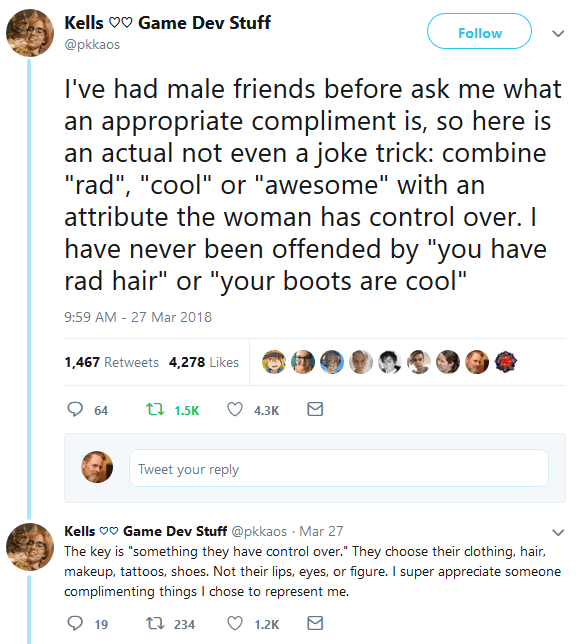
My number one tip for straight men (I mean, it could conceivably work for other genders and sexualities, but you’d have to adjust it quite a bit) is: inagine they’re a man.
Imagine that you just randomly told some bloke in a pub that he has beautiful eyes.
That you walked up behind your coworker Jim and started caressing his neck and shoulders while talking to him about the budget.
That you just sent a large and unexplained bouquet of flowers to Darren in Accounting.
That instead of complimenting a coworker on her breasts, you complimented him on his dick.
Does the action now seem weird? Uncomfortable? Do you no longer want to do it now that it isn’t directed at somebody you are sexually attracted to?
That strongly suggests that your action has a sexual aspect to it and therefore probably counts as sexual harassment!
If you can’t give a compliment without being accused of sexual harassment, the problem isn’t this PC World…it’s you















 Beltainefaerie's Flights of Fancy