one of the more valuable things I’ve learned in life as a survivor of a mentally unstable parent is that it is likely that no one has thought through it as much as you have.
no, your friend probably has not noticed they cut you off four times in this conversation.
no, your brother didn’t realize his music was that loud while you were studying.
no, your bff or S.O. doesn’t remember that you’re on a tight deadline right now.
no, no one else is paying attention to the four power dynamics at play in your friend group right now.
a habit of abused kids, especially kids with unstable parents, is the tendency to notice every little detail. We magnify small nuances into major things, largely because small nuances quickly became breaking points for parents. Managing moods, reading the room, perceiving danger in the order of words, the shift of body weight….it’s all a natural outgrowth of trying to manage unstable parents from a young age.
Here’s the thing: most people don’t do that. I’m not saying everyone else is oblivious, I’m saying the over analysis of minor nuances is a habit of abuse.
I have a rule: I do not respond to subtext. This includes guilt tripping, silent treatments, passive aggressive behavior, etc. I see it. I notice it. I even sometimes have to analyze it and take a deep breath and CHOOSE not to respond. Because whether it’s really there or just me over-reading things that actually don’t mean anything, the habit of lending credence to the part of me that sees danger in the wrong shift of body weight…that’s toxic for me. And dangerous to my relationships.
The best thing I ever did for myself and my relationships was insist upon frank communication and a categorical denial of subtext. For some people this is a moral stance. For survivors of mentally unstable parents this is a requirement of recovery.
Tag: abuse
Corrective Rape- A South African Speaks
wickedwitchofthewhothehellcares:
Okay, I wasn’t going to do this, but it kept eating at me (and other people around me). So. Let it be known that I am a South African Bisexual cis female.
“Corrective rape was a term coined by South African lesbians! Thus this is a lesbian-only term!” is something that’s getting thrown around a lot by the Discourse Brigade.
The first time I saw this I burst into laughter. I mean, I am the victim of corrective rape and never have I ever been told by any of my lesbian sisters to not use this term. It never occurred to anyone I know that I would not be able to use this term, or that this is not what my sexual assault was.
It was yet another example of how silly people could be. Were people who had never spoken to a single LGBT+ South African really going to be this ignorant?
I never took it seriously for a second because, really? Surely nobody actually thought that South African Lesbians were gonna expect everyone to conform to some nebulously specific list of things to qualify to use the term “corrective rape”.
But hey, as an African you get used to people talking over you and thinking you ride to school on a lion. Whatever, you laugh and you move on.
But I couldn’t move on.
Because people kept telling other people that they were, I don’t know, spitting on people’s graves, for using this term “incorrectly”.
So let me tell you this right now: If your assault happened because you do not conform precisely to your society/culture’s cisheteronormative* values, congratulations! You get to use the term corrective rape. Compliments of your South African brethren.
End. Of. Fucking. Discussion.
Now- let me tell you why I couldn’t move on.
Because the assholes that are policing the use of this term are spitting on the graves of every single one of my fucking ancestors.
Allow me to explain.
South Africa is a really unique place. Did you know we have eleven (11) official languages? That’s not including the minority ethnic groups that call my country home.
Now, when you realise that you have nine (9) traditionally black South African cultures, two (2) white cultures, the Chinese people, the Indian people, Other Africans… You may begin to figure out we’re really fucking diverse.
And we’re pretty proud of that diversity. Post Apartheid.
Apartheid was a system built- at its core- on ‘us’ vs ‘them’. It wasn’t inclusive. It separated people. It put some people in positions of power over others. It redefined the term ‘gatekeeping’ (in my opinion).
It was really fucking nasty.
It killed a lot of people.
And then Nelson Mandela came along. You know the story- he was imprisoned and instead of hating everyone he taught love and inclusion (after Winnie Mandela got him freed whilst running the Struggle- go read up on her. She’s a true feminist icon).
He is the father of our nation. And he taught us that hatred and bigotry and exclusion are never ever the way to go.
Afrikaans is still an official language. Part of the old Afrikaans anthem is still included in our official anthem.
We are taught that this is our country’s way forward.
We’re the Rainbow Nation!
LGBT+ people were granted every single right American LGBT+ people are still fighting for in our constitution in 1994.
But unfortunately, this lead to a huge homophobic backlash.
Thus- corrective rapes started happening all across the country.
But! The assholes who rape people? They don’t ask whether you’re lesbian or gay. They don’t check your credentials.
They can rape the girl who’s a little too ‘butch’ for their tastes, or the boy who might not play football (soccer for the Americans).
They do not care if you are a card carrying member of the LGBT+! They care only for the fact that you don’t look masculine/feminine enough. That you might have been staring at a boy/girl. That you said no earlier. Maybe you have a LGBT+ friend, so obviously you’re the same. Or hell, maybe your parents know you’re LGBT+ and they pay someone to rape it out of you. Maybe your arranged husband does it on your wedding night.
They do not care how you do not conform to societal standards- only that you do not.
And in South Africa we know this.
We know that no one’s rape is exactly the same as anyone else’s. Because it could never be exactly the same.
So yeah, here a completely straight white girl could use the term “corrective rape” and no one, no one, would bat an eyelash. Because she was correctively raped.
Because we know that united we stand, but divided we fall. And we have fallen so very very far in our past.
So no.
You do not get to fucking gatekeep this term which my brothers and sisters and I in this struggle have shed our blood and tears in.
You do not get to exclude people in our name.
Not when we freely gave this term to the world to use as and if needed.
Kindly respect us and our culture enough to not spit directly into our and our forefathers faces.
*I’m so sorry Trans Tumblr. I couldn’t find another word that really worked here.
** Yes, I have spoken to my fellow LGBT+ brethren. This is a PSA from the majority of us. If only because I cannot speak for all South Africans. Some of us are assholes too.
*** I know the UN wants to rename it “homophobic rape” but we will never us this term since it throws our Trans/NB/intersex/Bi/Ace/Aro/Agender/Questioning/Ally siblings under the bus. It frankly goes against what we invented it for. You, however, are welcome to coin the term yourselves.
one of the more valuable things I’ve learned in life as a survivor of a mentally unstable parent is that it is likely that no one has thought through it as much as you have.
no, your friend probably has not noticed they cut you off four times in this conversation.
no, your brother didn’t realize his music was that loud while you were studying.
no, your bff or S.O. doesn’t remember that you’re on a tight deadline right now.
no, no one else is paying attention to the four power dynamics at play in your friend group right now.
a habit of abused kids, especially kids with unstable parents, is the tendency to notice every little detail. We magnify small nuances into major things, largely because small nuances quickly became breaking points for parents. Managing moods, reading the room, perceiving danger in the order of words, the shift of body weight….it’s all a natural outgrowth of trying to manage unstable parents from a young age.
Here’s the thing: most people don’t do that. I’m not saying everyone else is oblivious, I’m saying the over analysis of minor nuances is a habit of abuse.
I have a rule: I do not respond to subtext. This includes guilt tripping, silent treatments, passive aggressive behavior, etc. I see it. I notice it. I even sometimes have to analyze it and take a deep breath and CHOOSE not to respond. Because whether it’s really there or just me over-reading things that actually don’t mean anything, the habit of lending credence to the part of me that sees danger in the wrong shift of body weight…that’s toxic for me. And dangerous to my relationships.
The best thing I ever did for myself and my relationships was insist upon frank communication and a categorical denial of subtext. For some people this is a moral stance. For survivors of mentally unstable parents this is a requirement of recovery.
If it wasn’t stated outright – it wasn’t said.
It’s important to communicate this frankly, too. Make it clear that you can’t know or respond to their concerns unless they actually bring them up. Be proactive in telling the people you care about that you need them to tell you when something’s wrong, and that you’ll listen.
I also want to bring up that passive-aggressive behaviour and a heavy reliance on subtext can itself be a toxic coping mechanism in response to a fear of not being listened to when talking about things directly –
normalizing actual direct communicationcreates a safe space for everyone. It’s good for your loved ones too when you set boundaries around this and follow through on your commitment to have these conversations.
Note to my ex.
Today my professor told me every cell in our entire body is destroyed and replaced every seven years. How comforting it is to know that one day I will have a body that you will have never touched.
This just made me feel so warm.
thank you.
Important especially for victims of abuse, remember your body is yours and it heals in more ways than you realize.
Okay, so I just want to say that this isn’t necessarily true. Most of your cells have died and regrown several times in seven years, but some haven’t, and some have died and won’t return. The seven year cell renewal is a myth perpetuated by popsci in magazines everywhere.
That being said, anywhere they may have touched you, your skin, your hair, your nails and so on, was changing the moment they departed your life, even before that. Your skin became skin they’ve never touched within 27 days. Your hair grows (on average) six inches per year, so depending on how long yours is, you were rid of their touch there within a few years tops. Your nails will completely regrow within six months tops. You were a body they never touched within three or four years. You will be a body they never touched within three or four years.
You have been rewriting your body, you are your own, you are constantly changing, and you are the only one who owns your body 100% of the time.
I’m here for correcting science myths in supportive ways.
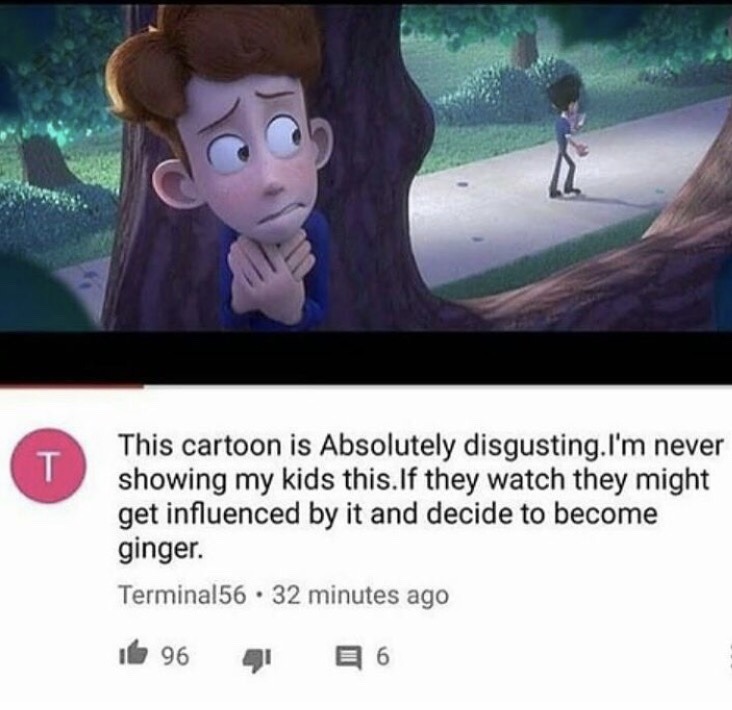
Straight ally humor is making it sound like you’re gonna say something violently homophobic but then not because it’s so Funny and doesn’t make the Gays have a split second of fear from seeing so many real homophobic comments based like this and seeing a straight ally™ do this for likes is not good
I once heard someone say that ‘’’jokes’’’ like that are the equivalent of someone raising a hand as if to hit an abuse survivor, then laughing when you flinch. I think it’s an appropriate comparison.
That sounds… really accurate good addition pal
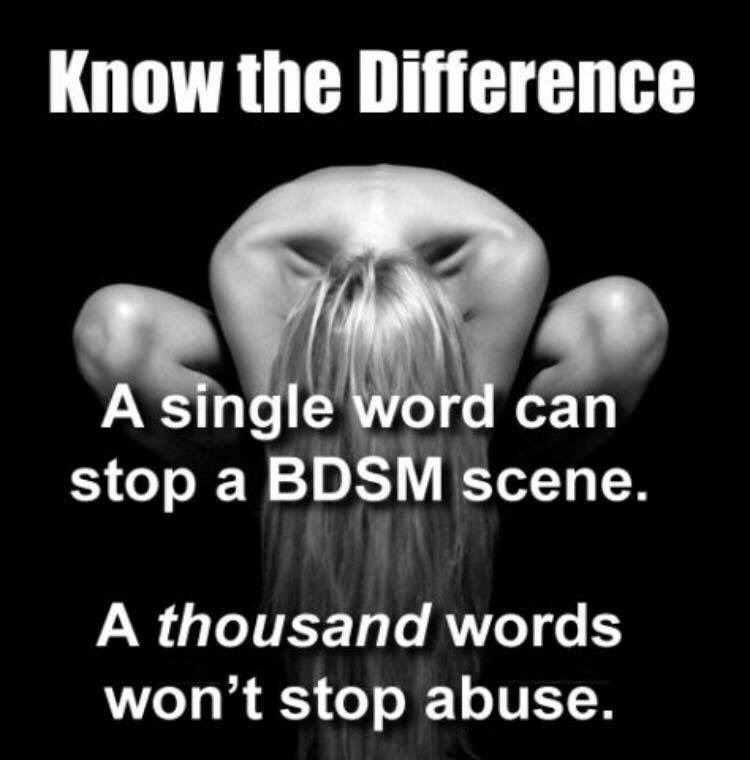
There is such a huge difference. Don’t forget, safe words are immensely important!



“She devoted her life’s energy to creating the character of Joan Crawford. Always beneath that is Lucille LeSueur, and that became what was so fascinating to play, whether it was just under the surface, just in a gesture or a glance behind the eyes or whatever, that character was always there….She was a great beauty, but she really worked hard. I don’t know anybody that worked harder than Joan Crawford. To be Joan Crawford and to sustain this career and to create this kind of iconic mythology? There’s a lot to admire about her, especially when you think about what she had to overcome, where she came from….I’ve never seen her as being monstrous at all. We did all that research–I read the four biographies, her own books, and hundreds of interviews–and no one ever said anything but kind things about her. I don’t want to comment on mothers and daughters [and the relationship described in Mommie Dearest], because within any family there’s always a part of a relationship that no one outside can ever understand. But from everything I’ve read, it seems impossible that the woman was as monstrous as she was made out to be.“ –Jessica Lange
This makes me really, really twitchy. While she was beautiful and hardworking and mother-daughter relationships can be complex, this sounds so much like everything people always say about abusers, particularly if they are rich, famous, white or all of the above. That fun guy always ready to help a friend can still be abusive at home. That hardworking career mom might still beat her children or go on verbally abusive tirades. This section reads like abuse apology: “ I don’t want to comment on mothers and daughters [and the relationship described in Mommie Dearest], because within any family there’s always a part of a relationship that no one outside can ever understand. But from everything I’ve read, it seems impossible that the woman was as monstrous as she was made out to be.“ If you don’t want to comment on it, don’t mention it. As it IS mentioned, you clearly DID want to comment on it and what you wanted to do was gloss over a victim’s experience. Of course you want to find ways to make a character nice and relatable if you have to play them and very few people identify themselves as abusers or villains in their own story, so as an actor portraying someone who is complex, difficult, or evil you need to walk an interesting line. Unfortunately, this seems like excusing her behaviour or dismissing distressing claims, because people from the outside didn’t find her that way. Maybe Jessica Lang is right and Joan Crawford was slandered or misrepresented, but without some kind of proof for that feeling, I think it is irresponsible to say so. I don’t really think that is the message anyone, especially abuse victims needs to hear.
i’m concerned about boys with mental illnesses and eating disorders and abusive relationships and sexual assault survivor stories and self-harming tendencies who never get the attention or care or help they need because all of those things “don’t happen to men” or because “all men are horrible monsters” and i just wanna say if you’re a boy and you’re struggling with something hard, your gender doesn’t diminish or dismiss your struggles or make them any less significant or difficult and i love you and i’m here for you
t h a n k
throwback to when someone very important to me was told he was faking his debilitating eating disorder because “cis men don’t have those” (((:
 Beltainefaerie's Flights of Fancy