The other day I was washing my hands and another woman came out the stall a couple seconds after I did. She wasn’t cis, and a different woman waiting for someone to finish up looked angry and opened her mouth to say something. Before she could, I smiled real friendly a this woman who’s just trynna wash her hands and told her I loved her skirt, and we started talking clothes.
The waiting woman was still clearly pissed but she didn’t say anything because she knew I wouldn’t have her back. That’s all it took to keep some poor lady just trynna scrub up from getting harassed.
Sometimes doing the right thing is really hard and kinda scary. Other times all it takes is making it clear that you won’t support someone’s nastiness. It’s a little enough thing to do your part.
“I never learned my Navajo language and I was never inspired to learn it. As I got older, I realized how valuable our language is to the livelihood of our Navajo Nation. ” -Dr. Shawna L. Begay
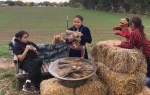
Our Navajo or Diné language is in danger of becoming extinct. Help us create and develop the first Navajo-English educational media TV puppet show, “Diné Bí Ná’álkid Time” which means ‘The Navajo Movie Time.’ It will inspire and teach our youth basic language skills using media as a technology tool. Parents, grandparents, children and grandkids can learn to speak Navajo fluently together within their own homes.
Long-time friends and educators, Dr. Shawna L. Begay and Charmaine Jackson have teamed up to create this new TV pilot for an all-ages audience or for anyone who wants to learn the Navajo language.
With your support, it’ll be the first educational Navajo and English puppet show that will teach and preserve the Navajo language and culture through digital media.
After several years of extensive research on the Navajo Nation, Dr. Begay recently completed her PhD from the University of Nevada-Las Vegas with her doctorate thesis, ‘Developing A Navajo Media Guide: A Community Perspective.’ As project director, she quickly realized she was a pioneer on the topic.
“When I decided what topic to study I realized there existed very little research in Indigenous educational media, especially with our Navajo people,” stated Dr. Begay. “As Navajo people, we have our own learning objectives and Navajo way of knowing is completely different for Euro-Western schooling. I decided that I had to research and develop our own curriculum guide that is meant to teach Navajo through media.”
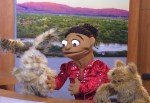
Dr. Begay and Jackson, co-writers of the show, developed the first 3-puppet characters and plan for many more. The pilot features Nanabah-a young Navajo girl, Gáh (Rabbit) and Dlǫ̀ǫ̀ (Prairie Dog) who will go on endless adventures learning about language, gardening, the environment and the importance of family values. Nanabah is fluent in Navajo and likes to teach children about life on the reservation with her animal friends and special guests. Children who want to learn Navajo will also be an important part of the show by interacting with Nanabah, her friends and storyline.
Dr. Begay’s research concluded there exists very little research in the area of Indigenous educational media. Currently media is a very powerful tool that can be used to teach. She is cognizant of the digital age we live in and the opportunities to utilize media to revitalize the Navajo language.
“Star Wars and Finding Nemo,” dubbed in Navajo, was a great place to start and it has garnered national exposure of our language. However, we need a show based on our own Navajo learning principals our ancestors set out for us to learn and live by. I don’t think a non-Navajo, non-Native or non-Indigenous person can do that for us, nor should they. We, as Navajo, need to produce this show ourselves, if we are to be truly sovereign,” added Dr. Begay.
Both educators, Dr. Begay and Jackson, of Naalkid Productions have been talking about this educational language project for about the past four years and still have a long way to go to finance their dream.
“With the support of Navajo TV Anchor Colton Shone, our team of Navajo artists, filmmakers, family and friends, this video pilot is a huge step forward,” said Jackson. “Our journey has just begun and the big next step is finding financial support to create a whole new puppet TV series.”
We aim to raise $50,000 with this project which will allow us to continue with pre-production and production aspects of making this digital media project become a reality. We need your help to save our language by teaching Navajo to our future generations.
Pre-Production: -Script writing for the pilot show -Puppet Development/Creation -Casting for puppeteers and other talent that will be on screen -Hiring of all key cast and crew
Production: -Locations and permits -Rental of Studio space -Equipment: cameras, sound, lights, etc. -Cast and Crew budget
Despite all the notes on this post, they’re still at $13,155 of their $50,000 goal.
If
you’re still feeling shy about writing fic, if you’re feeling that
that’s now how you’ll grow as a writer or publish, know that some pretty
well-known names wrote fan fiction—and then went on to write original work, work that
generated its own fandoms.
Hugo-award
winner Lois McMaster Bujold, author of stories like The Mountains of Mourning,Paladin
of Souls, and Cryoburn, wrote Star
Trek fan fic as a young girl. Andy Weir, writer of The Martian, the book from which the movie was made, wrote Ready Player One fan fic. Mark Gatiss, co-creator
of Sherlock, has been writing Doctor Who stories for decades.
There’s
more. R. J. Anderson, best-selling author of young adult fiction and writer of
the novels Knife,Arrow, and Swift, started out with fan fiction and says getting online,
sharing her stories with other readers, and meeting other writers, encouraged her
and improved her skills.
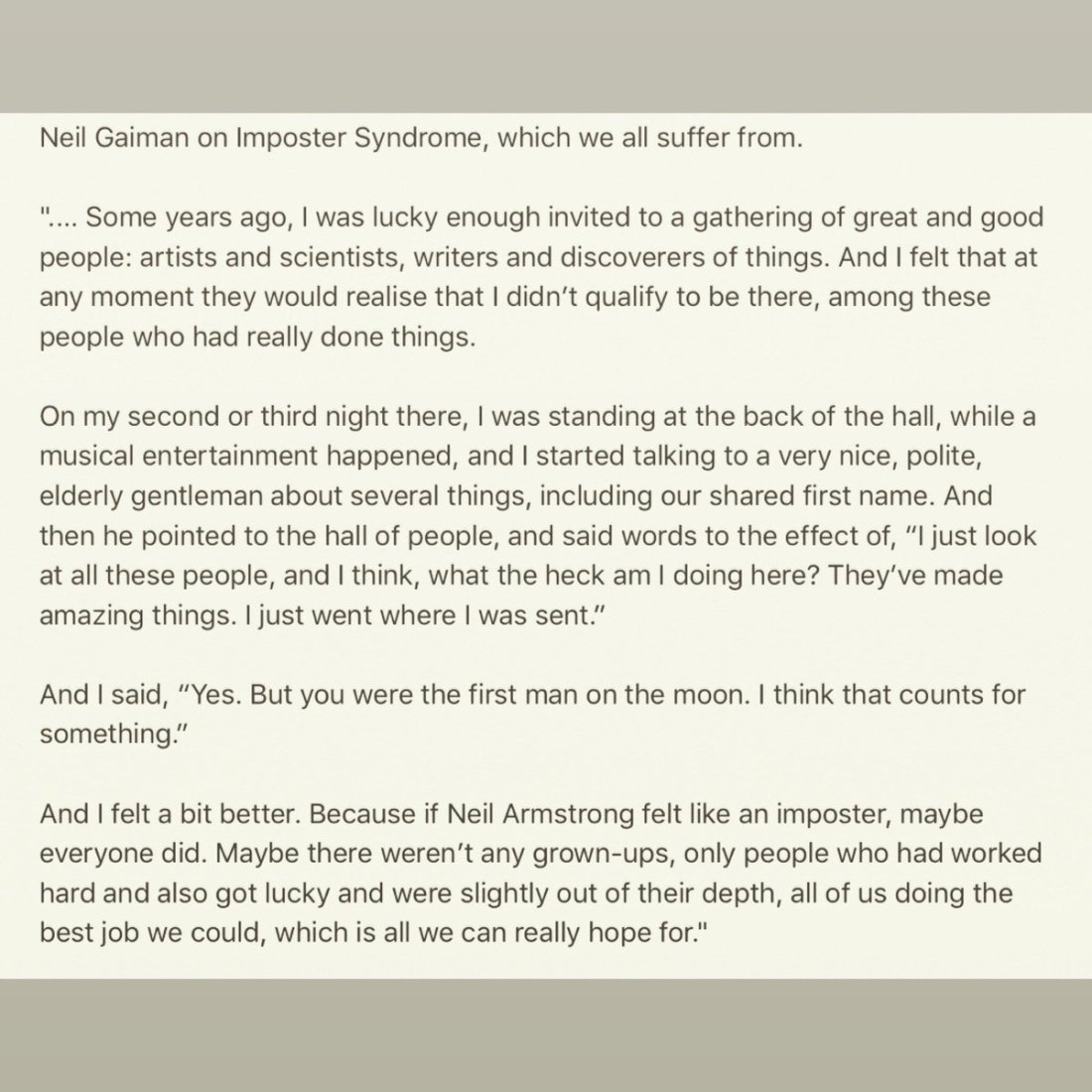
Neil
Gaiman, author of Neverwhere, Stardust, and American Gods, used to write fic, saying he earned a Hugo “for
a story that ripped off Arthur Conan Doyle’s Sherlock Holmes stories and H. P.
Lovecraft’s Cthulhu mythos.”
Gaiman
goes on to say that all writing helps
you hone your writing skills. “I think you get better as a writer by
writing, and whether that means that you’re writing a singularly deep and
moving novel about the pain or pleasure of modern existence or you’re writing
Smeagol-Gollum slash you’re still putting one damn word after another and
learning as a writer.”
Then there are fans who took their geek passions and turned
them in to award-winning programming. Irish filmmaker Emer Reynolds devoured
sci-fi growing up, her shelves full of Philip K. Dick, Michael Moorcock and
H.G. Wells. In this last year Reynolds released to world-wide and award-winning
acclaim the feature length science documentary The Farthest.
Writer Chris Charter couldn’t get enough of The Twilight Zone, loving it so much he
kept fiddling with the format—leaving failed TV shows in his wake—until he went
on to create The X-Files, a programme
so popular in the early 90s that people avoided making Friday night plans—me
among them!
These examples are just the tip of the fic and creativity
iceberg and the take home
message is simply this:
Just
damn well write the stories you want to write. Create the art you want to
create. Love the fandom you love.
It’s
that love and passion and practice that can take you so very, very far.






 Beltainefaerie's Flights of Fancy