The Pentagon concedes that gender dysphoria is treatable, but asserts there is “considerable scientific uncertainty and overall lack of high-quality scientific evidence demonstrating the extent to which transition-related treatments” address the symptoms associated with gender dysphoria. The report mentions the high suicide rates of the transgender population as a central reason for its ban.
Our findings make it indisputable that gender transition has a positive effect on transgender well-being. We identified 56 studies published since 1991 that directly assessed the effect of gender transition on the mental well-being of transgender individuals. The vast majority of the studies, 93 percent, found that gender transition improved the overall well-being of transgender subjects, making them more likely to enjoy improved quality of life, greater relationship satisfaction and higher self-esteem and confidence, and less likely to suffer from anxiety, depression, substance abuse and suicidality.
Only four studies (7 percent) reported mixed or null findings, and none found that the transitioning created more harm than good. Despite recent media focus on anecdotes about “transgender regret,” actual regret rates across numerous studies were minuscule, generally ranging from 0.3 percent to 3.8 percent. Our review of primary research confirmed the positive findings of at least 16 previous literature reviews.
The research shows that gender transition improves well-being, and that it can redress the specific health conditions that the military claims are its primary concern, particularly suicidality. A 1999 United States study found a “marked decrease of suicide attempts” and substance use in its postoperative population. In a 2014 British study, gender transition “was shown to drastically reduce instances of suicidal ideation and attempts.” The study reported that “67 percent of respondents thought about suicide more before they transitioned and only 3 percent thought about suicide more post-transition.”
Research suggests that gender transition may resolve symptoms completely. A 2016 literature review by scholars in Sweden concluded that, most likely because of improved care over time, transgender “rates of psychiatric disorders and suicide became more similar to controls,” and that for those transitioning after 1989, “there was no difference in the number of suicide attempts compared to controls.” The corollary is also true: Another study found that withholding hormone treatment from transgender people increased the risk of depression and suicide.
While transgender people can still face disproportionate stresses after transition, research suggests that stigma and discrimination are primary causes of such “minority stress.” That’s all the more reason we should provide treatment and social support rather than exclusion and barriers to care.
Suicide and mental health challenges do not, of course, define transgender people, many of whom are just as healthy as their peers. There are other populations that are plagued by suicide, including the military community itself. Children of military members are at much higher risk for suicidal ideation than both the general and the transgender population. Yet children of service members are not barred from enlisting, despite these higher risks. This suggests a double standard in which transgender people are singled out for unequal treatment not because they present an unacceptable risk but simply because of bias.
This website links to 73 research studies on transgender people which you can read in their entirety and summarizes their findings in 8 bullets!
This post has more statistics if people don’t want to read the whole papers!
This post has suicide hotlines for anyone who needs them.
Lee says:
This could be useful in trying to convince your parents that transitioning is necessary for you!
Constantly torn between “I can’t ask for help bc then I’m annoying and everyone will be mad” and “I must ask for help at every possible stage because I might do it wrong and then everyone will be mad” ya feel
HOLY SHIT U PUT IT IN WORDS
Disability is not an abusive roommate
Nondisabled storytellers often seem to think of disability as an abusive roommate coming and imposing its will on a disabled person. When they think about wheelchair users, they don’t think about the mobility that’s made possible by assistive technology. They think about how they’d feel if someone chained them to a wheelchair and forcibly prevented them from walking.
This misconception is dangerous. When people see disability-related limitations as similar to violent restraint, they don’t know know to tell the difference between the innate limitations of someone’s body and limitations being forcibly imposed on them by others. When people don’t understand the difference between living with a disability and living with an abuser, they assume that abusive experiences are inevitable for people with disabilities.
In reality, there’s nothing inevitable about abuse. Coming up against the limitations of your body is fundamentally different from being forcibly restrained by someone else. Whether or not you are disabled, having physical limitations is part of having a body. Being disabled means that you have a different range of physical limitations than most other people do, but they don’t come color coded ‘normal’ and ‘disabled’. When you’re used to the way your body works, the disability-related limitations feel pretty similar to those that aren’t disability-related.
Using assistive technology is pretty similar to using technology for any other important reason. Everyone uses technology to do things that their bodies alone would be too limited to do. Most people use cars to go further than they could walk; some people also use wheelchairs to go further than they could walk. Some people type or use communication tablets to say more than they could with their bodies alone; some people use musical instruments; some people use both. People with disabilities have different limitations, and as a result, often benefit from technology that wouldn’t be particularly useful to nondisabled people.
When technology is associated with disability, people tend to have the dangerous misconception that using it is the same as being restrained. This can very easily become self-fulfilling. When people prevent disabled people from doing things, their inability to do it is often misattributed to their disability. For instance:
Wheelchairs as restraints:
- Anthony lives in a nursing home.
- Anthony speaks oddly, and most people interpret most of what he says as meaningless. They say ‘Anthony doesn’t communicate’.
- Anthony can walk and wants to walk, but the nursing him staff don’t let him.
- George, the supervisor, tells Sage, another staff member, ‘Anthony wanders. We need to keep him in his wheelchair to keep him safe. Just lock the seatbelt. After a few minutes, he stops resisting.’
- Every morning, Sage puts Anthony in a wheelchair that he can’t move, and ties him down so he can’t escape.
- Sage tells Marge, a new volunteer, ‘That’s Anthony. It’s so nice to have a volunteer – he’s been spending most of his time in the hallway lately. He doesn’t walk or talk, but he loves visiting the garden! Can you take him there?”
- Marge and Sage don’t know what Anthony actually wants, and it doesn’t occur to them that it’s possible to ask.
- Anthony actually hates the garden and hates being pushed by other people. He prefers to spend his time in the library or with children in the children’s wing.
- Marge assumes that Sage is the expert on Anthony, and assumes that Anthony’s disability prevents him from walking and communicating.
- Marge doesn’t know that Anthony has stopped talking because he’s constantly surrounded by people who refuse to listen to him.
- Marge doesn’t know that Sage is tying Anthony to a wheelchair against his will to stop him from going where he wants to go.
- Marge doesn’t know that she’s doing something to Anthony against his will.
- When people see disability and restraint as the same thing, they fail to notice that people with disabilities are being violently restrained — and often unwittingly participate in physical abuse of disabled people.
The disability-as-restraint misconception also causes people to fail to understand that when they deny people access to assisstive technology, they’re preventing them from doing things, eg:
Mobility:
- Beck is an eight year old who can’t walk.
- Beck has a wheelchair, but he’s not allowed to bring it to school.
- At school, he’s strapped into a stroller that others push around.
- His classmate Sarah has *never* had a wheelchair that she can push herself.
- At a staff meeting, Lee, their teacher, says “Because of their disabilities, Sarah and Beck can’t move around by themselves. Even though they stay in one place all day, they’re so fun to have in our class!”
- Lee is missing the crucial fact that the reason Sarah and Beck are immobile is because they’re being denied access to assistive technology.
- When people see disability and externally-imposed limitation as the same thing, they don’t notice limitations being imposed on disabled people.
Communication:
- Rebecca types on her iPad to communicate.
- Clay takes away Rebecca’s iPad.
- Clay tells Sophie, ‘Rebecca is nonverbal. Her disability prevents her from communicating, but we’re working on improving her speech.’
- Sophie sees that Rebecca can’t talk, and assumes that it’s her disability that’s preventing her from communicating.
- Actually, it’s *Clay* who is preventing Rebecca from communicating.
- When people see disability and abuse as the same thing, they don’t notice abuse of disabled people.
It’s important to be clear on the difference between disability and abuse. Disability is not an abusive roommate; people with disabilities are only abused if someone is abusing them. When people with disabilities are restrained against their will, this is not caused by their disabilities; it’s caused by the people who are restraining them. Restraint is an act of violence, not an innate fact about disability. When wheelchairs are used as restraints, the wheelchair isn’t the problem; the violence is the problem. When people are denied access to assistive technology, it’s not their disability that’s limiting them; it’s neglect. When we stop conflating disability and abuse, we’re far less likely to see abuse of people with disabilities as inevitable.





Mystère à la Tour Eiffel
I dont know what this is but I want to be on it.
Mystère à la Tour Eiffel: The French Lesbian Eiffel Tower Murder Mystery Period Costume Drama of Color in Which ZERO Lesbians Die that You’ve Been Waiting For
ZERO LESBIANS DIE??
I need it.






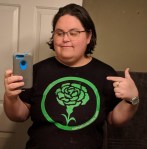
221b Con Intro
Name: Lee (aka @HRHSherlock on Twitter)
Pronouns: She/her
Age: Old enough to know better, young enough not to care
Located: Bay Area
What do you do in fandom?: I run Carnation Books @carnationbooks, primarily. Find me at the con for swag (free buttons and badge ribbons!). Multiple Carnation Books authors and staff members will be at the con 😀 http://www.carnationbooks.com
As a part time gig, I shitpost on Twitter. I used to shitpost full-time on Tumblr, but I find Twitter less distracting at the moment.
How long are you staying?: til Tuesday, but I’ll be spiritually communing with whale sharks on Monday.
How are you getting there?: UFO
Cosplays: uwu flower twink Luke Skywalker cosplay, casual low-key Kylo Ren cosplay, or a t-shirt with my company logo on it (did you know that it’s legally mandatory for all small business owners to own one of these or they throw you in business jail)
Roomies: @thehats and @berlynn-wohl are my squad 4 life
Where to find me: I’m not *on* any panels, but I’ll be attending a handful of them. I’ll probably be primarily hanging at the bar (assuming the bar is cool at the new hotel, otherwise I’ll be hanging out at whatever the rad cool spot is) and chatting with anyone who wants a chat!
Drinks: drinking is fun, but I myself live in Sobertowne. You can buy me a diet Coke with lemon tho if u wanna chat me up in a saucy fashion
Hugs: please do not hug me! BUT fist bumps are more than welcome!!
Pictures: feel free
Anything else?: Talk to me about publishing your fanfic as original work or scream with me about multifandom shipping, both are equally welcome. I love making new friends.
If you are trying to find me, there’s a decent chance Russian fur hat wearer/Han Yolo @berlynn-wohl or Princess Leia cosplayer/my roommate @thehats knows where I am, and if they don’t know, they can find out real quick-like.
Optional Contact Details: get at me on Twitter (@HRHSherlock) or just shout “Carnation Books!” into the ether and I will spontaneously materialize
Reblog this intro: with gusto!!
Heading to 221bcon?? Chat me up!!!

The production team for The Prince of Egypt conferred with roughly 600 religious experts to make the film as accurate as possible.
The production team for Exodus conferred with 3 White guys who’d admittedly never heard of Egypt, but assured the final, mayonnaise slathered product was as accurate as possible.
I’m pretty sure I heard somewhere that The Prince of Egypt is actually the only Exodus-inspired movie to get approval from leaders of all three of the major religions that share the story- Judaism, Christianity, and Islam.
Well damn
“Because DreamWorks was concerned about historical and theological accuracy, Katzenberg decided to call in Bible scholars, Christian, Jewish and Muslim theologians, and Arab American leaders to help his movie be accurate as well as excellent. After previewing the developing DreamWorks’ animated Bible story, all these leaders noted that the studio executives listened and responded to their ideas, and praised the studio for reaching out for comment.”

Name: RJ
Pronouns: he/him
Age: 26
Located: Charlottesville (yes, THAT Charlottesville)
What do you do in fandom?: I cosplay, I make jewelry with my partner Mazi, and I RP as Sebastian Moran.
How long are you staying?: Thursday through Monday
How are you getting there? Driving 10 hours, uphill both ways.
Roomies: @slashaddickt and @mazikeenstudios.
Where to find me: In the dealer room behind the Mazikeen Studios table.
Drinks: Hard yes,
Hugs: Yes! Just don’t sneak up on me.
Pictures: Only if you get my good side~ However my partner does NOT like pictures, so make sure you don’t catch them in frame!
Anything else?: Come buy our DEEPLY DISCOUNTED FANDOM JEWELRY. Seriously though, we’re getting out of the fandom jewelry game so everything must go!
Contact info: Message me here on tumblr!
Reblog this intro: Why not?I am fiercely jealous of your hair.
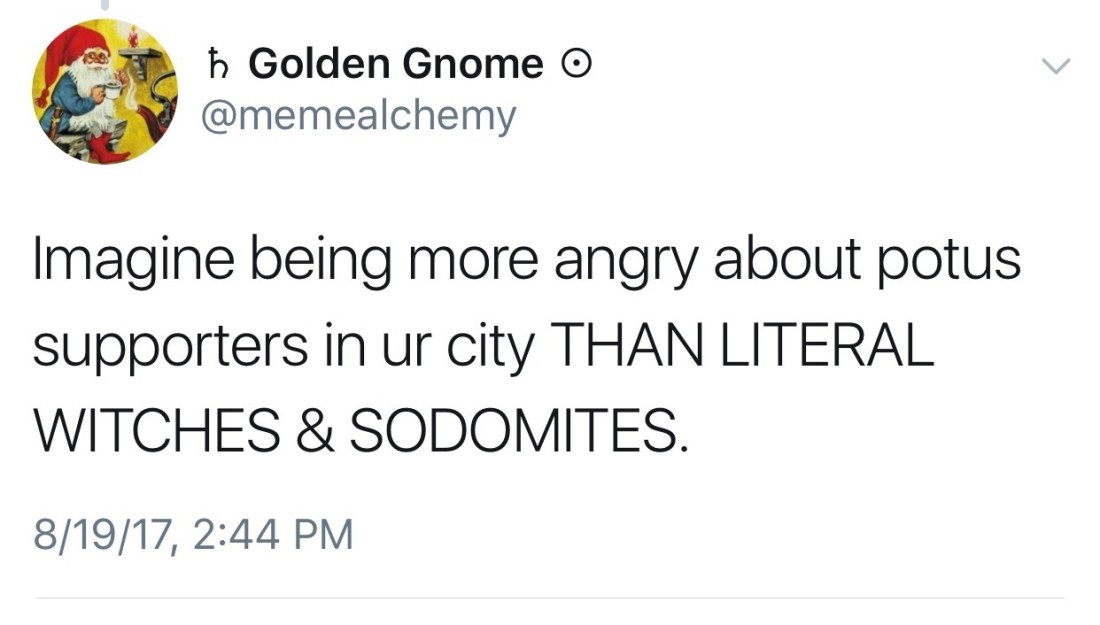
I’ve been laughing for like twenty minutes at the idea of somebody typing this and thinking “good tweet” and then hitting the post button
Luv those witches and sodomites
someone in the 1600s wrote this tweet
 Beltainefaerie's Flights of Fancy